
Installation
How to Prevent Lippage with Large Format Tile
Short answer
Lippage is the height difference between adjacent tile edges. It is prevented by a flat substrate (1/8″ in 10 ft), checking tile warpage, using offsets of 33% or less on planks, back-buttering for full mortar coverage, and leveling clips such as Levtec. Allowable lippage for joints under 1/4″ is about 1/32″ plus the tile’s inherent warpage.
What is lippage?
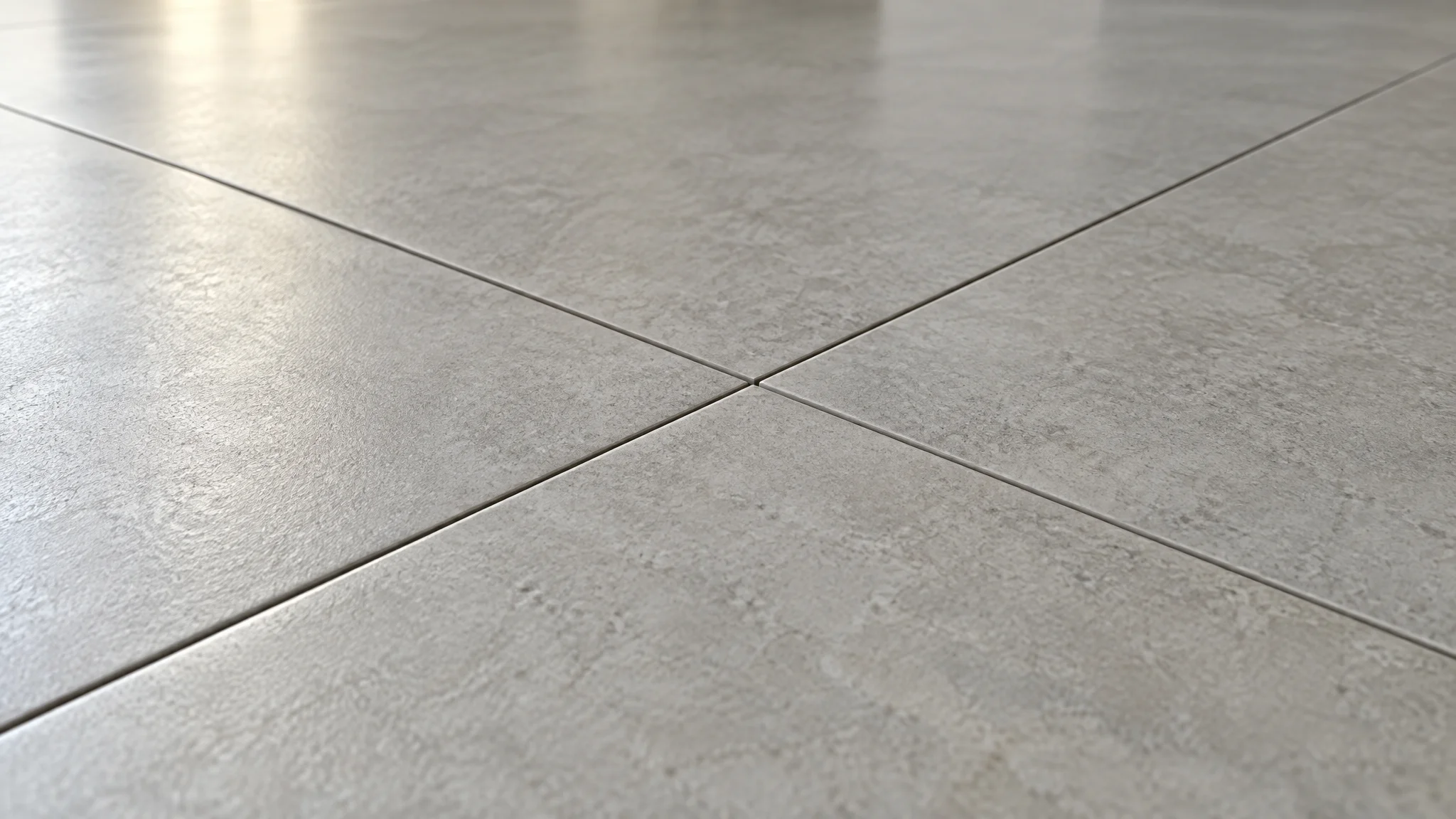
Lippage is when one tile edge sits higher than its neighbor. On large format tile it is magnified: a 48″ tile with a tiny bow throws visible shadows under low-angle light from windows — and catches socks, mop heads and toes.
What the standards allow
ANSI A108.02 allows lippage of roughly 1/32″ plus the tile’s allowable warpage for grout joints from 1/16″ to under 1/4″. Gauged porcelain panels installed under ANSI A108.19 have their own, tighter expectations.
Five steps we use on every job
- Flatten the substrate. We map the floor with a laser and straightedge, grind highs and pour self-leveler until it’s within 1/8″ in 10 ft.
- Inspect the tile. We check crates for warpage and caliber before setting; badly bowed batches go back.
- Use the right offset. For planks and rectangular tiles longer than 18″, offsets are limited to 33% unless the manufacturer says otherwise.
- Back-butter and trowel correctly. Large-and-heavy-tile mortar, directional troweling and back-buttering achieve 85–95%+ coverage.
- Clip every joint. Leveling systems such as Levtec hold edges in plane while mortar cures.
Can existing lippage be fixed?
Minor lippage on hard porcelain cannot be ground down like natural stone. Usually the only real fix is removing and resetting the affected tiles — which is why getting it right the first time matters.
Planning a floor? Get a free quote from installers who do nothing but large format.